
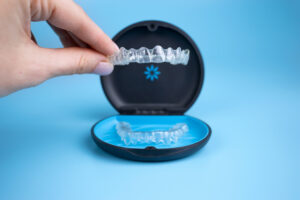
Blog title: Clear Aligners and Clenched Jaws: Can Invisalign Handle Teeth Grinding?
Invisalign has become one of the most popular ways to straighten teeth, and it’s easy to see why: the clear aligners are nearly invisible, removable, and comfortable to wear. But if you grind or clench your teeth (a condition called bruxism), you might wonder whether those thin plastic trays can stand up to the pressure. The good news? For most people, grinding doesn’t rule out clear aligner treatment. Your aligners may even give your teeth a little extra protection along the way. Here’s what you should know.
How Bruxism Affects Your Smile
Teeth grinding often happens during sleep, so many people don’t realize they’re doing it until a dentist spots the signs. Over time, the constant pressure can wear down enamel, chip or crack teeth, and leave you with jaw soreness, morning headaches, or sensitive teeth. Stress is a common trigger, but your bite can also play a role. When teeth don’t meet evenly, the jaw may shift and grind as it searches for a comfortable resting position.
Can Invisalign Aligners Handle the Pressure?
Invisalign aligners are made from a flexible, durable material designed to apply gentle, steady force that gradually moves your teeth. Grinding can cause them to wear down a bit faster than usual, but this rarely becomes a problem. Because you switch to a new set every one to two weeks, each tray is typically replaced long before it wears thin.
If you do notice cracks, thinning, or holes in your aligners, let your dentist know right away. They can order a replacement so your treatment stays on track.
A Built-In Layer of Protection
Since aligners cover the biting surfaces of your teeth, they create a barrier between your upper and lower teeth. And because you wear them 20 to 22 hours a day, that protection lasts through most of the day and night. This can be especially helpful if you clench during stressful moments at work as well as in your sleep. Aligners aren’t a replacement for a custom night guard, but they can help limit enamel wear while you’re in treatment.
There’s a potential long-term benefit, too. Because a misaligned bite can contribute to grinding, straightening your teeth may help reduce the habit for some patients.
What to Discuss With Your Dentist
Before starting treatment, be upfront about your grinding habits. If you currently wear a night guard, you generally won’t be able to wear it with your aligners, so your dentist will explain how to protect your teeth during treatment. Patients with severe bruxism or TMJ problems may need to address those issues first, sometimes with splint therapy, before Invisalign is the right fit. Once your teeth are straight, you’ll wear a retainer to keep them in place, and your dentist can help you decide whether a night guard makes sense going forward.
About the Practice
ForestLeaf Dental of Justin provides comprehensive care for patients in Justin, TX, including preventive, cosmetic, and restorative dentistry, TMJ treatment, and Invisalign clear aligners. Dr. Hui Zhang earned her dental degree from the University of Michigan School of Dentistry, where she completed her clinical requirements a year ahead of her classmates and was selected for the school’s Global Initiative Program. She believes great care starts with clear communication and makes a point of explaining every step of treatment. If you grind your teeth and want to know whether Invisalign is right for you, call (940) 946-0055 or contact us to schedule a consultation.