
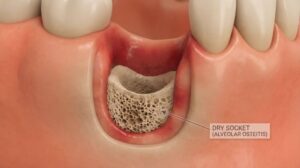
Following a tooth extraction, most people start to feel like themselves again within a week or two. Some soreness and tenderness are normal during recovery, but the healing process usually goes quite smoothly. Occasionally, though, a complication can develop. One possible concern is dry socket. What is dry socket, how serious is it, and how can you lower your risk? This blog post covers important basic information.
What Is Dry Socket?
Dry socket, which is also called alveolar osteitis, happens when the blood clot at an extraction site does not form properly or is lost too early. That clot is important because it covers and protects the bone and nerves underneath. If they become exposed, you may experience significant pain, along with an unpleasant taste or odor in your mouth.
Signs of dry socket often show up a few days after an extraction. The discomfort may feel like a deep, throbbing ache that spreads from the extraction area toward your ear, eye, or jaw. In some instances, the pain can make normal daily tasks difficult and may feel much stronger than the mild soreness that is expected after a typical extraction.
The good news is that dry socket is not common. Some estimates suggest that it occurs in about 2 – 5% of tooth extraction cases.
Tips for Preventing Dry Socket
While dry socket cannot always be prevented, you can take steps to reduce your risk. Keep these tips in mind:
- Do not drink through a straw because the suction could loosen the blood clot.
- Avoid smoking and tobacco use, which can slow the healing process and make complications more likely.
- Do not rinse forcefully or spit vigorously for at least the first 24 hours after treatment.
- Choose soft foods and avoid chewing directly on the side of your mouth where the tooth was removed.
- After the first day, gently rinse with salt water to help keep your mouth clean.
Managing Dry Socket
If you think you may have dry socket, try not to worry. Although it can be very uncomfortable, it is treatable. Contact your dentist and describe your symptoms. They may rinse or clean the extraction site and place a medicated dressing to ease discomfort and encourage healing. They might also recommend pain medication or other at-home steps to help you stay comfortable while the area recovers. In many cases, dry socket improves within about a week or slightly longer.
Dry socket is a real possibility after tooth extractions, but it is not common. And if it does occur, it is very manageable. Do not let worries about this complication hold you back from undergoing necessary treatment!
Meet the Practice
Dr. Hui Zhang at ForestLeaf Dental is proud to provide top-quality care for the Justin, TX, community. As a graduate of the country’s leading dental school, she is focused on patient-centered service that prioritizes comfort and long-term outcomes. Under her leadership, our team offers extractions, dry socket treatment, and more. To learn more about our practice or to request an appointment, contact our office at 940-946-0055.