
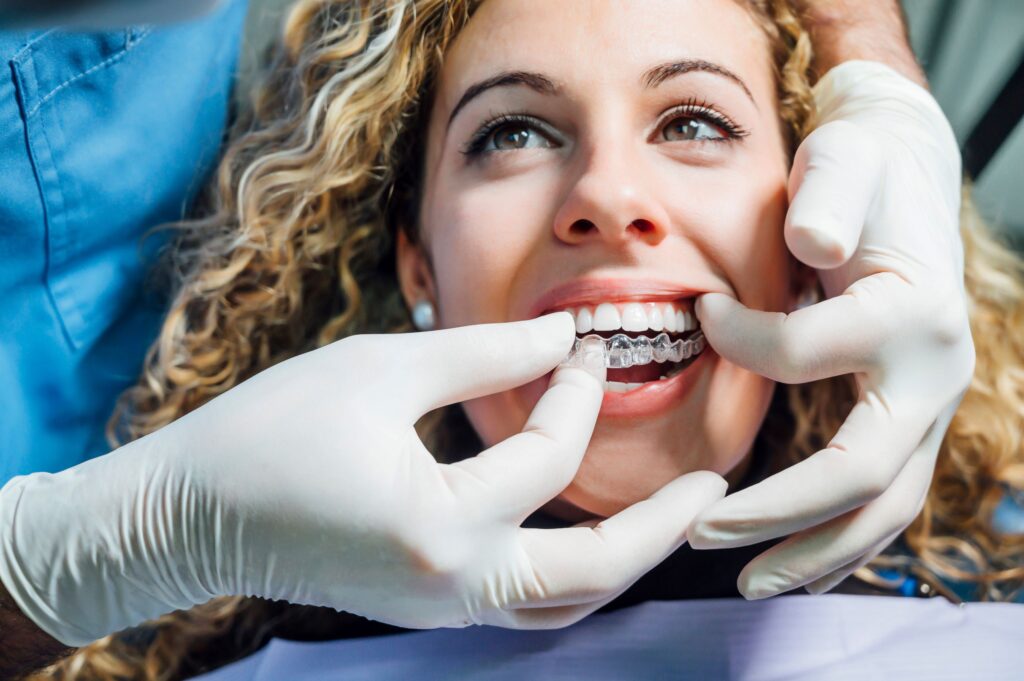
Many people want straighter smiles but prefer to avoid the frustration and hassle of traditional orthodontics. If you’re seeking a more comfortable and discreet treatment option, you might benefit from Invisalign.
Unlike braces, which rely on metallic brackets and archwires, this clear alternative utilizes transparent plastic trays that fit snugly over your arches to shift them. However, you must care for your smile carefully during treatment to avoid common oral concerns, such as tooth decay. Continue reading to learn more about preventing cavities with Invisalign!
How Does Invisalign Work?
For this service, your dentist begins by making impressions of your teeth and gums that are uploaded to special Invisalign software that uses the information to design all the trays needed to shift your teeth to their ideal positions.
Then, once you begin wearing your trays, you’ll be required to keep them inserted for 20 to 22 hours daily to keep your teeth from reverting to their previous placements. Then, after a week or two, you’ll be provided with the next trays in your series to switch to, which accounts for the ongoing movement of your teeth. Most patients complete Invisalign in about 12 to 18 months, though your overall timeline could be longer or shorter, depending on your unique circumstances.
Can I Get Cavities With Invisalign?
You might think that wearing the clear plastic trays over your teeth can protect them from damage and decay, but that’s not necessarily true. For example, they’re not meant to be worn to eat or drink anything other than water, because they can be harmed by the pressure of biting or chewing.
That means your enamel won’t be any more protected from the foods you eat during treatment than it was before you started wearing your clear aligners. Not only that, but you might trap bacteria or leftover food in the space between the plastic and your teeth and gums, giving germs plenty of time to proliferate. This can result in cavities, gum disease, discolored aligners, and even bad breath!
How Can I Protect My Smile Throughout My Treatment?
Fortunately, it’s possible to avoid many common oral concerns by implementing a twice-daily dental hygiene routine. You should remove your aligners both morning and night to thoroughly brush and floss your teeth to remove harmful plaque buildup and bacteria that contribute to tooth decay and periodontal problems.
Be sure to take a few minutes to also gently scrub your trays with a soft-bristle toothbrush and clear dish soap or a mild toothpaste that won’t abrade the material. This helps keep them looking and feeling fresh and clean.
You’ll also be required to visit your dentist for routine follow-up visits during your treatment, which allows your dentist to monitor your oral health to catch and address any issues that might arise and ensure that you’re on track with your anticipated timeline!
Meet the Author
Dr. Hui Zhang enjoys taking the time to get to know her patients so she can tailor treatment plans to meet their unique dental needs. She earned her dental degree from the University of Michigan School of Dentistry, which is the top-ranked dental school in the nation. Today, she offers a comprehensive menu of services, including Invisalign, to help families in Justin build and maintain their happiest, healthiest smiles. You can request an appointment on the website or call (940) 946-0055.